
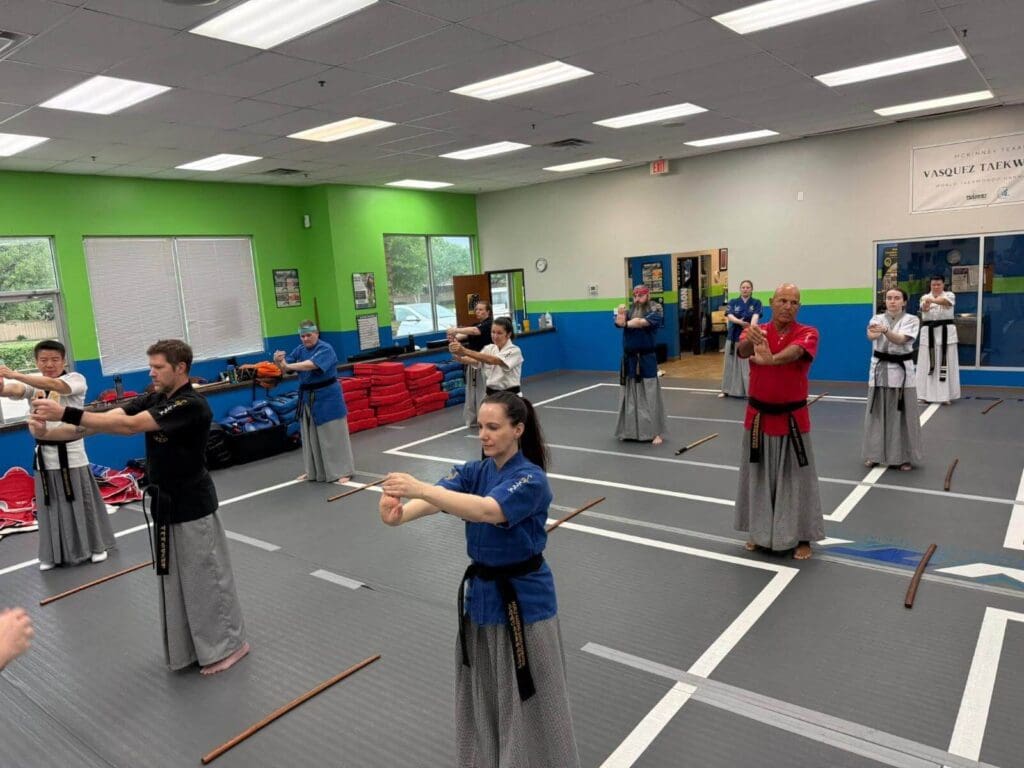
Taekwondo is more than just learning how to kick. Different taekwondo training methods, from controlled poomsae movements to fast-paced sparring, help students develop a variety of skills. While some exercises build accuracy, balance, and body control, others strengthen timing, coordination, and quick decision-making.
Understanding how these training methods in taekwondo work together helps students build a stronger foundation and become more well-rounded martial artists.
Let’s explore what each method teaches and how the skills connect.
- How Taekwondo Training Methods Develop Complementary Skills
- Taekwondo Kicking Mechanics in Isolated Drills
- Poomsae Training as a Study of Movement Structure
- Taekwondo Sparring Drills and Adaptive Movement
- How Kyukpa Tests a Different Dimension of Taekwondo Skill
- Taekwondo Training Methods Compared by Learning Objective
- Why Taekwondo Roundhouse Kick Balance Deserves Separate Attention
- Why Taekwondo Poomsae Rhythm Needs Its Own Technical Study
- Reading the Results of Taekwondo Practice Methods
- Connecting Taekwondo Training Methods Into a Complete Practice
- Frequently Asked Questions
- Start Your Taekwondo Journey With Confidence
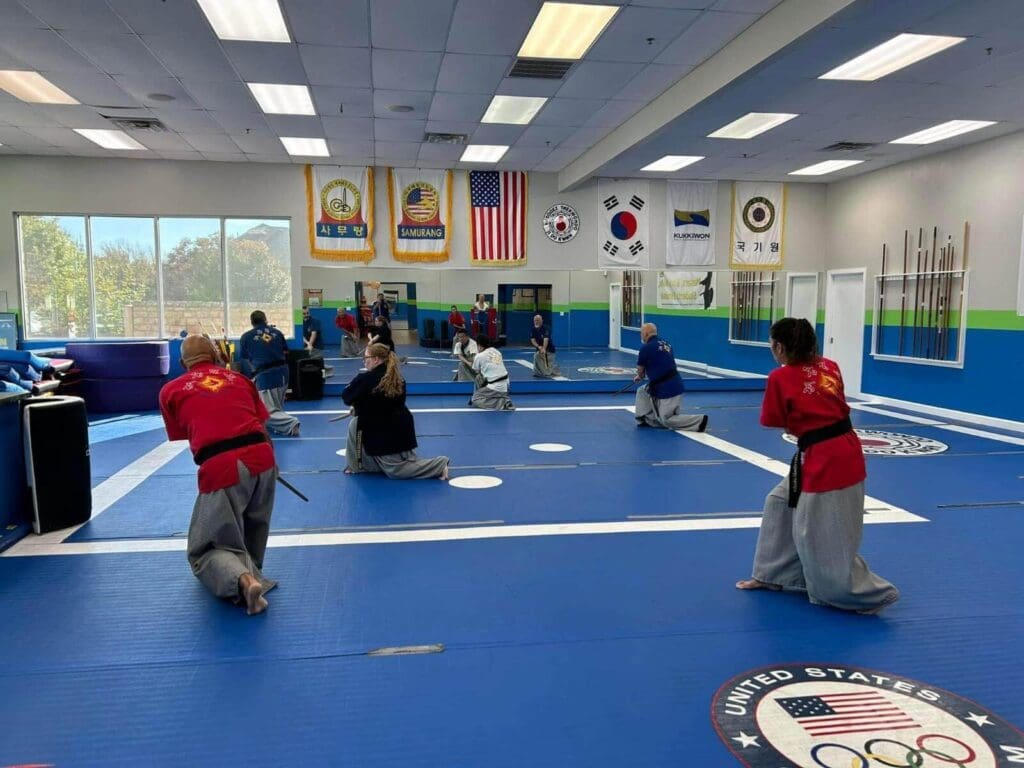
How Taekwondo Training Methods Develop Complementary Skills
A single technique can appear in several parts of Taekwondo practice. Students might perform a kick during a solo drill, include it in a form, or use it against a moving partner. Although the movement is similar, each setting teaches something different.
Different taekwondo practice methods develop different abilities. Some focus on accuracy and body control, while others develop timing, awareness, and decision-making. Combining these methods helps students build skills that are useful in more than one training situation.
The difference between repeating a movement and applying it
Repetition helps the body become familiar with a movement. When students practice the same kick regularly, they learn where to place their feet, how to move their hips, and how to control their legs.
However, performing a technique correctly is only part of learning Taekwondo. Students must also understand when and how to apply it.
For example, kicking a stationary target allows students to concentrate on technique. Using that kick against a moving partner requires timing, distance control, and quick decisions.
Both forms of practice are important. Repetition builds a reliable foundation, while application teaches students to use their skills in changing situations.
Accuracy, timing, structure and adaptability
Four important qualities influence taekwondo skill development:
- Accuracy: Performing a technique correctly and reaching the intended target.
- Timing: Choosing the right moment to perform a movement.
- Structure: Maintaining proper body positions and connecting techniques.
- Adaptability: Adjusting movements when the situation changes.
Different training activities place greater emphasis on certain qualities.
Isolated kicking drills help students focus on accuracy and control. Poomsae develops movement structure and coordination, while sparring challenges timing and adaptability.
These skills also overlap. For example, a sparring student still needs accurate kicks, and someone performing poomsae must control their timing.
How training context changes the purpose of a technique
Consider how a roundhouse kick changes across different training activities.
During a basic drill, students can focus on the kicking chamber, hip rotation, and controlled recovery. In a form, the same movement may be part of a longer sequence that requires coordination with other techniques.
Sparring introduces a different challenge. Students must judge distance, respond to movement, and decide when a kick is appropriate.
These differences also appear in poomsae, kyorugi, and kyukpa. Each format gives students a different way to develop and demonstrate their abilities.
Understanding these differences explains why instructors use several training methods instead of relying on one exercise.
Taekwondo Kicking Mechanics in Isolated Drills
Kicking drills provide a controlled setting for studying technique. Without a moving opponent, students can concentrate on how their bodies move.
This type of practice is useful for beginners learning basic kicks and experienced students refining their technique.
Even advanced practitioners return to fundamental drills when they need to improve accuracy, balance, or consistency.
The chamber, extension and recovery phases
Most Taekwondo kicks can be studied through three basic phases, although the exact movement depends on the technique.
- Chamber: The leg moves into a preparatory position.
- Extension: The kicking leg moves toward its target.
- Recovery: The leg returns to a controlled position after the technique.
Each phase affects the quality of the kick.
A weak chamber can make the movement harder to control, while poor recovery may leave the student off balance. An uncontrolled extension can also affect accuracy and body alignment.
Practicing these phases separately helps students recognize which parts of a technique need attention.
Developing sound taekwondo kicking mechanics begins with understanding the complete movement rather than focusing only on the moment of contact.
What stationary kicking can reveal about body position
Stationary drills make it easier to observe body alignment.
Without stepping or reacting to an opponent, students can pay closer attention to their supporting foot, hip position, and upper-body posture.
For example, the supporting foot often needs to pivot during a roundhouse kick. This allows the hips to turn while helping the student maintain a stable position.
The exact movement depends on the kick being practiced. Students should follow their instructor’s guidance rather than forcing their joints into uncomfortable positions.
Regular stationary practice can reveal small technical problems that may be difficult to notice during faster activities.
Why controlled repetition comes before speed
Many students want to kick faster as soon as they learn a new technique. Speed can be exciting, but moving too quickly may make errors harder to recognize.
Controlled repetition gives students time to understand the movement.
Once they can perform a technique consistently, instructors may gradually introduce greater speed or more demanding drills.
This approach helps students maintain accuracy and body control as the exercise becomes more challenging.
Proper preparation, reasonable training intensity, and adequate recovery also matter. Kicking at high speed before developing suitable control may increase strain, particularly when students force movements beyond their current ability.
What a kick drill cannot teach on its own
Although kicking drills are valuable, they cannot develop every Taekwondo skill.
A stationary drill does not fully teach students how to judge distance against a moving partner. It also provides limited opportunities to practice responding to unexpected movements.
A student may perform an excellent kick during individual practice but struggle to use it during sparring.
That does not mean the drill was ineffective. It simply means the student is facing a different challenge.
Combining kicking drills with other taekwondo training methods helps students develop both technical control and practical application.
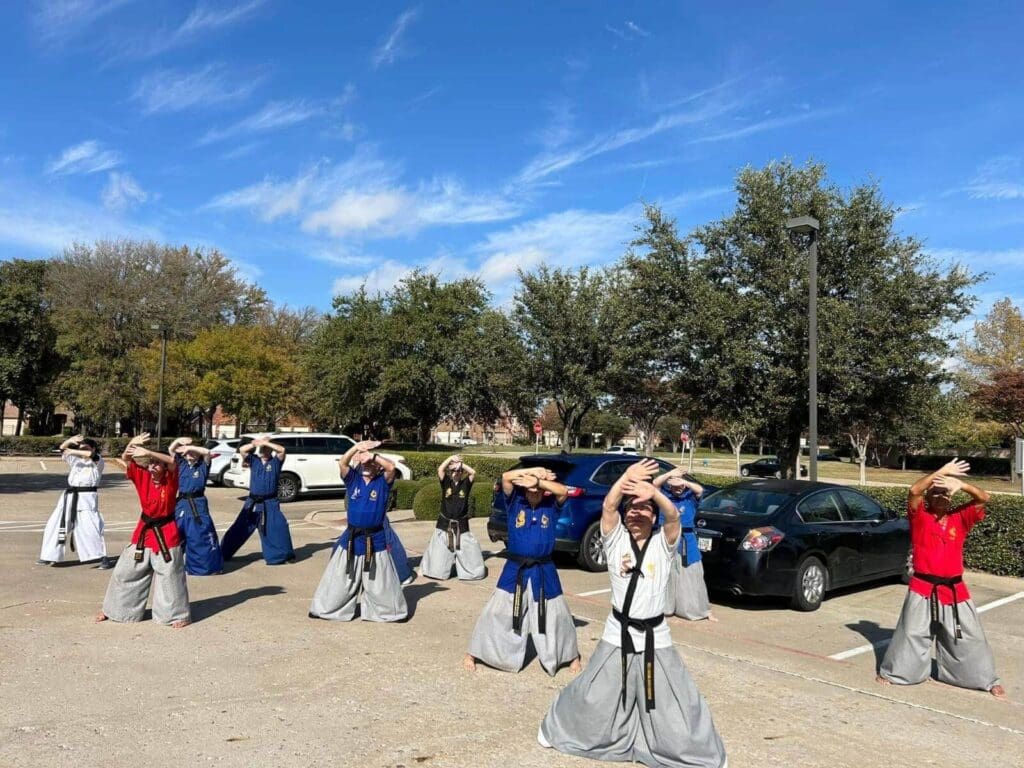
Poomsae Training as a Study of Movement Structure
Unlike isolated kicking exercises, poomsae involves a set sequence of techniques, stances, and directional changes.
These traditional forms allow students to practice connected movements without needing a partner.
Through poomsae training, students develop coordination, body awareness, and familiarity with Taekwondo techniques.
The goal involves more than remembering the order of movements. Students must also learn how individual actions fit together.
How predetermined sequences organize techniques
Each poomsae follows a prescribed sequence.
The practitioner knows which technique comes next, allowing greater attention to posture, positioning, and movement quality.
For beginners, this structure creates a clear learning path. Students can practice sections of a form until the movements become more familiar.
As their skills develop, they can work toward performing the complete sequence with greater consistency.
Repeating these patterns helps students understand how separate techniques connect within a larger movement sequence.
Direction changes, stance relationships and spatial awareness
Many forms require students to move in several directions.
A practitioner might perform a block, turn into a different stance, and continue with another technique. Each transition requires attention to balance and body position.
These movements challenge spatial awareness, which is the ability to understand where the body is positioned in relation to its surroundings.
Stance changes also teach students to shift their weight with control.
Unlike a drill that repeats one kick in the same direction, poomsae requires students to organize several movements while maintaining the correct sequence.
Why forms differ from reactive partner practice
During poomsae, the practitioner already knows which movements will follow.
This predictability allows students to concentrate on technical details without responding to another person’s actions.
Partner-based practice creates different demands. Distance can change unexpectedly, and students must respond to the movements of another person.
Poomsae cannot replace these reactive experiences, but it can strengthen the movement foundation students use elsewhere.
Both forms of practice have distinct purposes within a complete Taekwondo education.
Taekwondo Sparring Drills and Adaptive Movement
Working with a partner introduces challenges that cannot be fully recreated during solo training.
Distance changes, movements become less predictable, and decisions must happen more quickly.
Taekwondo sparring drills help students develop the ability to respond while maintaining control.
Different sparring exercises can range from carefully planned exchanges to more open activities, depending on experience and instructional goals.
Distance and timing with a moving partner
Distance control is an important part of Taekwondo kyorugi.
When practicing with a stationary target, students know where the target will be. A moving partner makes that distance less predictable.
Students must learn when to move closer, when to create space, and when a technique is suitable.
Timing becomes equally important.
A kick performed too early may not reach its target, while one performed too late may leave the student unable to respond effectively.
Through supervised partner practice, students become more familiar with movement patterns and the relationship between timing and distance.
The difference between responding and anticipating
Responding and anticipating are related but different skills.
Responding means reacting after recognizing another person’s movement. Anticipating involves noticing early clues and preparing for what may happen next.
Beginners often concentrate on recognizing techniques and responding safely.
With experience, students may become better at identifying patterns. For example, they might notice how a partner shifts weight before attempting a kick.
This growing awareness supports more effective decision-making during sparring.
However, anticipation is not the same as guessing. Students must remain ready to adapt when a partner does something unexpected.
Understanding controlled contact and training boundaries
Partner training requires clear expectations about contact and safety.
Depending on the exercise, participants may practice without contact, with light contact, or under specific sparring rules.
The appropriate level depends on the training purpose, student experience, and instructor guidance.
Protective equipment, suitable partner matching, and supervision help manage the risks involved.
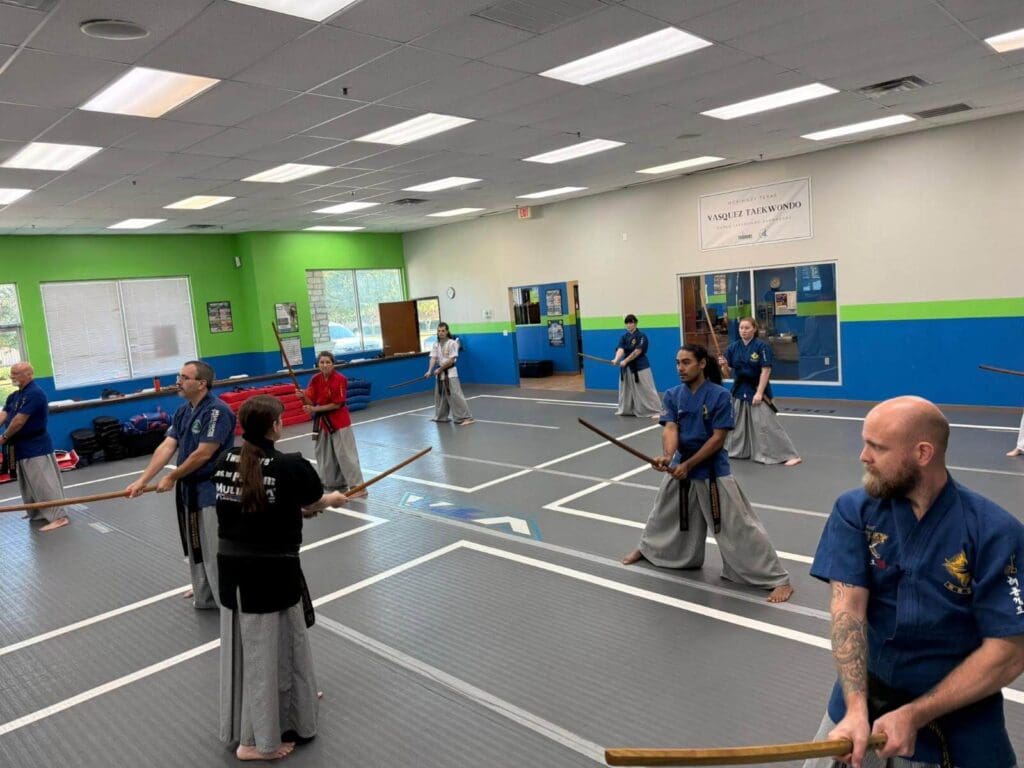
At Vasquez Taekwondo And Haidong Gumdo Academy, traditional and sport Taekwondo are part of the school’s stated teaching approach. Students should follow the instructor’s directions and the safety requirements of each activity.
Learning to respect training boundaries is an important part of developing controlled technique.
Why sparring cannot replace technical repetition
Sparring provides valuable experience, but it is not always the best place to learn a new movement.
During an exchange, students must pay attention to their partner, distance, and timing. This leaves less opportunity to study small technical details.
Isolated drills allow students to concentrate on those details before applying them in a more demanding situation.
For example, someone who struggles to maintain a stable kicking position may benefit from returning to a controlled drill.
Once the movement improves, partner exercises can help the student practice using it under changing conditions.
This is why technical repetition and sparring work best as complementary activities.
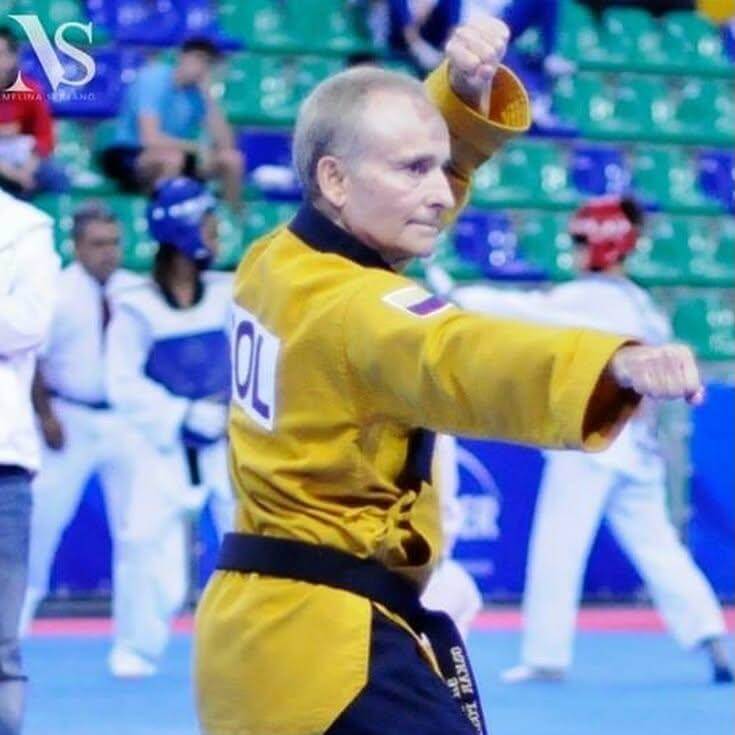
How Kyukpa Tests a Different Dimension of Taekwondo Skill
Kyukpa, commonly known as board breaking, demonstrates another aspect of Taekwondo practice.
Although breaking is sometimes viewed as a display of strength, successful technique also depends on alignment, accuracy, and controlled movement.
Unlike a standard kicking drill, breaking involves contact with a target designed for that purpose.
The result can provide immediate feedback, although whether a board breaks depends on several factors beyond technique alone.
Alignment and concentration at the moment of contact
Correct body alignment is important when delivering a controlled strike.
The position of the supporting foot, hips, striking surface, and upper body can affect how force travels through a technique.
When these parts work together, the movement is generally more efficient.
Students must also maintain attention throughout the action.
Hesitation, poor positioning, or an unsuitable striking surface can affect the result.
Breaking practice therefore requires students to consider both physical technique and concentration.
The distinction between technical precision and force
Power matters during board breaking, but greater effort does not always produce a better result.
The angle of contact, appropriate striking surface, target material, and technique all influence the outcome.
A strong practitioner using poor alignment may struggle with a break, while someone with better technique may succeed under suitable conditions.
This helps demonstrate why precision is important in martial arts.
However, breaking a board is not a complete measure of Taekwondo ability. It represents only one specialized training activity.
Why breaking practice requires qualified supervision
Board breaking involves real impact and should never be treated as a casual exercise.
Using unsuitable materials or attempting techniques without preparation can lead to injury.
Qualified instructors can assess whether a particular exercise is appropriate for a student’s experience and physical ability.
They can also supervise target placement, technique, and the use of suitable equipment.
Students should never attempt advanced breaking techniques without proper instruction.
When included in a carefully managed curriculum, kyukpa provides another way to explore technical precision and controlled application.
Taekwondo Training Methods Compared by Learning Objective
Each practice method develops particular skills while supporting other parts of Taekwondo training.
The following comparison highlights the primary purpose of each activity and the feedback students may receive.
| Training Method | Primary Skill | Type of Feedback | Limitation | Relationship to Other Methods |
|---|---|---|---|---|
| Isolated Kicking Drills | Accuracy and consistency | Body awareness and instructor feedback | Limited practice with moving partners | Builds a foundation for other kicking activities |
| Poomsae Training | Movement structure and spatial awareness | Repetition and instructor guidance | No unpredictable opponent | Develops coordinated movement sequences |
| Taekwondo Sparring Drills | Timing, distance and adaptability | Partner movement and instructor feedback | Less time to study individual technique details | Applies skills in changing situations |
| Taekwondo Pad Drills | Target accuracy, speed and controlled power | Target contact and instructor feedback | Does not fully recreate sparring | Connects technical drills with target practice |
| Kyukpa (Board Breaking) | Alignment and controlled impact | Breaking result and instructor assessment | Requires special preparation and supervision | Demonstrates selected technical skills |
When a structured sequence is useful
Structured sequences are helpful when students need to develop consistent movements.
Poomsae offers a repeatable pattern that can be practiced and reviewed over time.
Because the sequence stays the same, instructors can observe changes in posture, positioning, and control.
Students may also notice that a particular movement feels less stable than others.
This provides an opportunity to return to basic drills and study the technique more closely.
Structured practice is especially useful when the goal is to improve the quality of familiar movements.
When an unpredictable partner changes the task
Adding a moving partner changes the training environment.
Instead of concentrating entirely on personal technique, students must observe another person and respond appropriately.
A partner might step backward, change direction, or begin an unexpected movement.
These situations require quick decisions and good distance awareness.
Taekwondo reaction training helps students become more comfortable responding under controlled conditions.
Partner exercises can also challenge agility and coordination, particularly when movement patterns change quickly.
How the methods complement rather than replace each other
Each Taekwondo method offers something different.
Kicking drills support precision, while poomsae organizes techniques into meaningful sequences.
Pad work provides opportunities to practice contact with a controlled target. Sparring adds movement, timing, and decision-making.
Breaking practice introduces another form of technical feedback under supervision.
Together, these activities help students develop a wider range of abilities.
No single method needs to replace another. Understanding the purpose of each one allows students to appreciate why varied practice is valuable.
Why Taekwondo Roundhouse Kick Balance Deserves Separate Attention
The roundhouse kick appears in many Taekwondo exercises, but performing the kick is only part of the challenge. Students must also return to a stable position after extending the leg.
When the supporting foot or body position becomes unstable, the recovery can affect the student’s readiness for the next movement. This may be especially noticeable during activities that require several techniques in sequence.
Balance problems can also appear differently during stationary drills and partner practice.
Because recovery is such an important part of controlled kicking, it deserves focused technical attention. To explore this specific skill further, read our article on taekwondo roundhouse kick balance.
Why Taekwondo Poomsae Rhythm Needs Its Own Technical Study
Memorizing a poomsae sequence is different from performing it with coordinated timing. A student may know every movement but still find it difficult to connect the techniques smoothly.
Rhythm involves the relationship between movements, including transitions, controlled pauses, and changes in pace. These details can affect how clearly a practitioner demonstrates the intended structure of a form.
Students often discover that knowing what comes next does not automatically mean they understand how the movements should connect.
This makes rhythm a valuable subject for closer study. For a deeper explanation, explore our article on taekwondo poomsae rhythm.
Reading the Results of Taekwondo Practice Methods
Progress is not always measured by how fast a student can kick or how many techniques they remember.
Different taekwondo training methods develop different skills, so improvement may appear in several ways.
Students might become more consistent during drills, more coordinated in forms, or more comfortable responding to a partner.
Recognizing these changes helps students understand their development and identify areas requiring further practice.
Recognizing improvements in repeatability
Consistency is one useful sign of technical progress.
A student who performs a kick correctly once has demonstrated the movement, but repeating it accurately requires greater control.
Over time, regular practice may help students perform familiar techniques with fewer adjustments.
Instructors can look for improvements in balance, positioning, and movement quality across several repetitions.
Students may also notice that techniques feel more comfortable as they become familiar.
Rather than judging progress from one successful attempt, it is more useful to observe how consistently a movement can be performed.
Distinguishing isolated technical control from partner responsiveness
Strong technical control does not always produce immediate success in sparring.
A student may perform kicks accurately during drills but struggle when a partner begins moving.
These situations involve different demands.
Isolated practice emphasizes controlled execution, while partner training also requires observation, timing, and quick decisions.
Both abilities develop through practice, but improvement may happen at different rates.
Recognizing this distinction helps students avoid judging their overall ability from one training activity.
Understanding why progress in one method may not immediately transfer to another
Learning a technique in one setting does not guarantee that it will work equally well in another.
For example, a student who performs a controlled kick during a stationary drill may need additional practice before using it confidently against a moving target.
The movement is familiar, but the situation introduces new challenges.
This process is known as skill transfer.
Students can support it by gradually practicing familiar techniques in different settings under instructor guidance.
Progress may take time, particularly when an activity requires new decisions or movement patterns.
Understanding this helps students develop realistic expectations about their training.
Connecting Taekwondo Training Methods Into a Complete Practice
A complete Taekwondo education includes several types of learning.
Students build technical foundations through controlled drills, develop movement structure through poomsae, and practice responding to others through sparring.
Pad work and supervised breaking activities provide additional opportunities to explore accuracy, alignment, and controlled impact.
Physical conditioning may also support these skills by improving strength, mobility, and endurance.
Together, these activities create a varied approach to martial arts development.
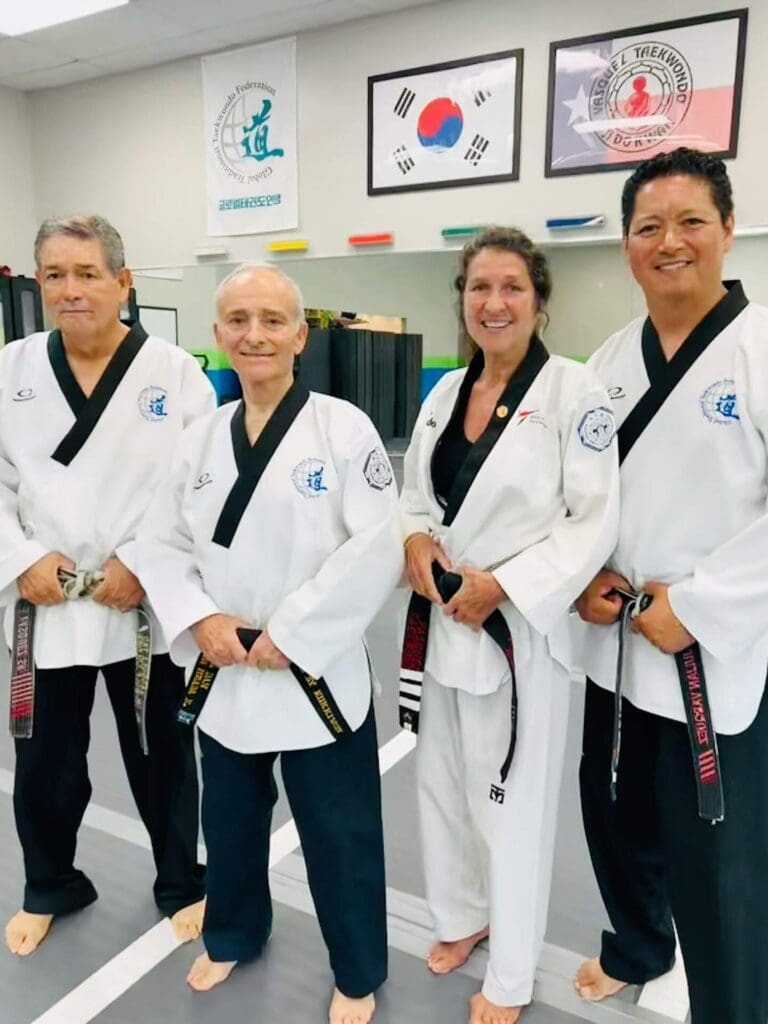
The curriculum at Vasquez Taekwondo And Haidong Gumdo Academy includes traditional and sport Taekwondo elements, reflecting the different ways students can study this martial art.
Rather than viewing each exercise as separate, students can learn to recognize how different skills support one another.
This understanding can make practice more meaningful at every experience level.
Frequently Asked Questions
Why does taekwondo use both poomsae and sparring?
Poomsae and sparring develop different but complementary skills.
Poomsae allows students to study prescribed movements, body positions, and transitions without an unpredictable opponent.
Sparring introduces distance, reactions, and changing timing.
Practicing both helps students distinguish structured technical execution from adapting movements to another person’s actions.
What is the difference between taekwondo kicking drills and sparring drills?
Kicking drills typically isolate a technique so students can focus on accuracy, control, and repeatable execution.
Sparring drills introduce a moving partner, changing distance, and decisions about timing.
A technically consistent kick does not automatically produce good sparring judgment.
Both methods are important because they develop different parts of Taekwondo skill.
Why is board breaking included in some taekwondo training?
Board breaking, or kyukpa, can demonstrate aspects of alignment, concentration, and committed technique against a controlled target.
It serves a different purpose from poomsae or sparring.
Because breaking involves impact and potential injury, students should approach it only under qualified supervision, using suitable materials and age-appropriate instruction.
Start Your Taekwondo Journey With Confidence
Learning Taekwondo involves more than mastering individual kicks. Through different taekwondo training methods, students can develop accuracy, movement control, timing, and the ability to respond in changing situations.
Whether you are just beginning or have been practicing for years, understanding the purpose of each exercise can help you make better use of your training. Choose one skill to observe during your next class, such as kicking recovery, poomsae transitions, or sparring distance, and discuss your progress with your instructor.
If you would like to learn how these skills fit into a structured curriculum, explore our taekwondo near me program page for more information about the academy’s approach to training.